
 Business License

Having disassembled 30 6BTAA5.9-C205 loader engines, I've finally figured out how the piston "walks.
Recently, I helped a repair shop clean up a mess—they were replacing the four-piece set on a loader equipped with a 6BTAA5.9-C205 engine. After installation and a test run, they immediately started tapping the cylinder. Upon inspection, they found that the connecting rods were installed backwards twice, causing the piston to "walk crookedly" inside the cylinder. Within half an hour, it had dug a deep groove into the cylinder wall.
Many people think that the piston moves steadily up and down inside the cylinder like an elevator, but they're wrong. The piston of this 6BTAA5.9-C205 doesn't move in a perfectly straight vertical line at all.
Its "walking partners" are the connecting rod and the crankshaft. The connecting rod isn't vertically aligned with the center of the cylinder. When the crankshaft rotates, the connecting rod sways left and right, and the piston's path is a wavy line with a slight "side-to-side rubbing" motion. I previously measured the piston skirt with a dial indicator. When it reaches the middle of its stroke, the skirt deviates about 0.1 mm in the direction of the connecting rod's swing. This is an intentional design feature from the manufacturer, not an assembly error. This engine has 205 horsepower, dozens more than a regular 6BT. The piston skirt has a special elliptical shape, not a perfect circle, to ensure it stays firmly against the cylinder wall during the stroke, preventing a clanging sound.
Intake Stroke: Slowly "Drawing in" Air
Many people don't know that the piston doesn't immediately plunge downwards at startup. At the very beginning of the intake stroke, the first third of its stroke from top dead center is actually quite slow—the intake valve has just opened, and it needs enough time for fresh air to flow in, preventing a vacuum from being created in the cylinder immediately.
Compression Stroke: Increasingly "Struggling" As it Goes Up
During the compression stroke, the piston moves upwards, initially faster and then slower. In the first half of the stroke, it moves smoothly with minimal resistance; the air pressure in the cylinder is only one or two kilograms. When it reaches about one-fifth of its stroke before top dead center, you can clearly feel the increased force even by turning the crankshaft with a wrench—at this point, the air in the cylinder is compressed, causing the temperature to surge to five or six hundred degrees Celsius and the pressure to nearly 4 MPa. The piston is essentially being forced upwards against a large spring.
Power Stroke: "Exploded" Out, with a "Swing" in the Middle
This is the most interesting stage. Many people think that once diesel fuel burns, the piston pushes downwards at a constant speed, but that's not the case. The diesel fuel ignites just before the piston reaches top dead center, instantly causing the pressure to surge to over 12 MPa. It's like the piston suddenly getting punched on the head. It doesn't immediately plunge downwards; it "wobbles" in place for a two- or three-degree crankshaft rotation before finally plunging downwards with sufficient pressure.
I examined the cylinder's workings with an endoscope. The piston's first third of its stroke was ridiculously fast, pulling the connecting rod taut. Midway through the stroke, because the connecting rod's angle was at its maximum, the piston would slightly "swing" to the side—this is why the piston skirt is elliptical, to catch this sway and prevent knocking. Near bottom dead center, it suddenly slows down, avoiding a sudden, sharp slam to the bottom.
Exhaust Stroke: Slowly "Squeezing Out Exhaust Gas"
After the power stroke, the piston moves upwards to expel exhaust gases, its speed returning to its previous fast-to-slow pattern. The first half rushes upwards, expelling most of the exhaust gas, then slows down near top dead center, allowing time for a "moistening" finish to clear any remaining exhaust gas from the cylinder.
90% of people don't know: Pistons have two "hidden tricks"
The first is "slight rotation." When the piston is working in the cylinder, it's not completely stationary; it slowly rotates in small circles along the direction of the crankshaft's rotation. This isn't a malfunction; it's because the manufacturer intentionally offsets the piston pin, allowing it to rotate slowly under stress, distributing wear evenly across the piston skirt and preventing it from rubbing in one spot.
The second point is "allowing for thermal expansion and contraction." When the engine is cold, a feeler gauge will show a gap of about 0.15 millimeters between the piston and cylinder wall. Once the engine warms up, the piston expands outwards due to the high temperature at the top, reducing the skirt gap to only 0.08 millimeters. Many apprentices don't consider this gap when assembling engines, fitting it in too tightly. The engine works fine when cold, but once warm, the piston gets stuck in the cylinder, causing cylinder scoring within half an hour.
Recently Posted
-
How do I adjust the valves on a Deutz diesel engine?
August 24, 2026As a seasoned supplier of Deutz diesel engines, I've had my fair share of experiences with these robust powerhouses. One Read More
 -
Do Deutz diesel engines require special fuel?
August 21, 2026The delivery time for Deutz engine parts is a critical factor that both suppliers and customers need to consider carefully. As a r Read More
 -
How does the 6BTA5.9-C180 engine handle sudden load changes?
August 13, 2026Recently, a Cummins 6BTA5.9-C180 rotary drilling rig suddenly got its drill rod stuck in a boulder, causing the load to jump to fu Read More
 -
How to replace the spark plugs of Xichai diesel engine (if applicable)?
August 11, 2026As a trusted supplier of Xichai diesel engines, I understand the importance of maintaining these powerful machines to ensure optim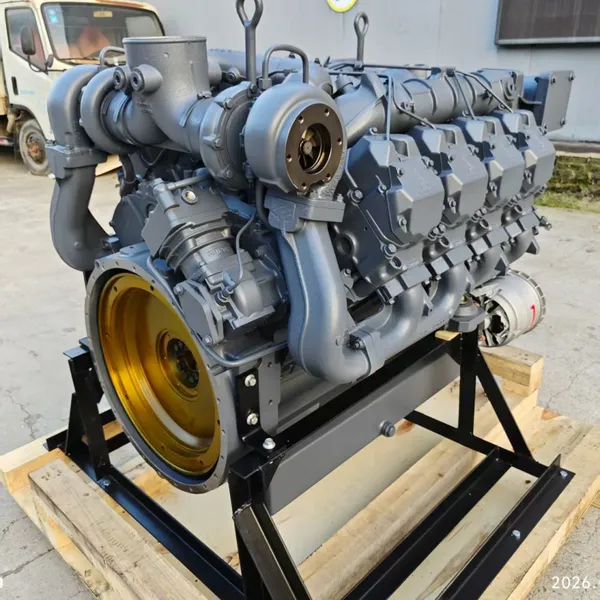 Read More

Contact Us
Recommended Products
-
 New 129 kW QSB6.7 Diesel Engine Excavator Construction Machinery Electric Start Water-Cooled Core Including Motor PumpUS$ 1888.00 - 3888.00MOQ: 1 Unit
 -
Wholesale Diesel Engine Genuine 4 Stroke Direct Injection Doosan DL08 Engine for SaleUS$ 4558.00 - 4800.00MOQ: 1 Unit
-
Factory Price DOOSAN DL06 Construction Machinery Motor 6 Cylinder 115kw Water-Cooled With Core Components Engine and PumpUS$ 4752.00 - 5000.00MOQ: 1 Unit
-
Factory Price 4 Stroke 115kw Doosan DB58 Complete Engine Assy for Dx220 ExcavatorUS$ 3450.00 - 3650.00MOQ: 1 Unit
-
Factory Manufacture 123kw 4 Stroke Volvo D6e Machinery Engine for Construction MachineryUS$ 7500.00MOQ: 1 Unit
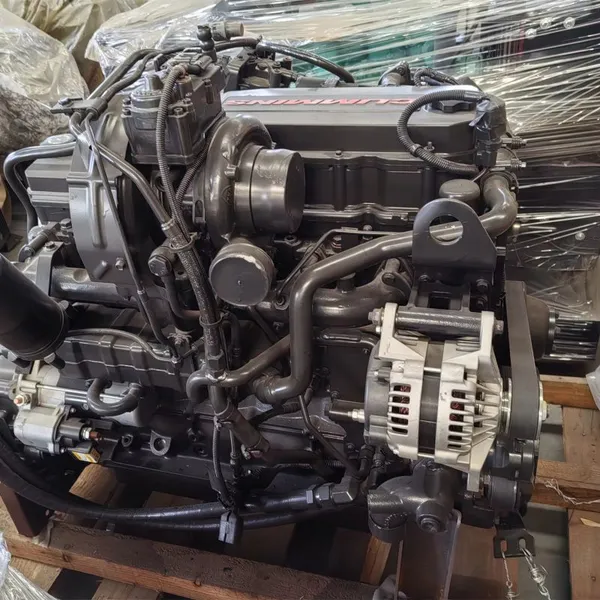
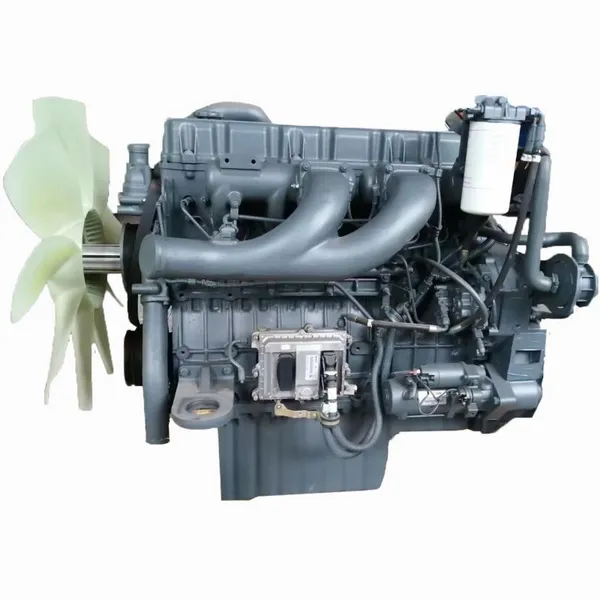
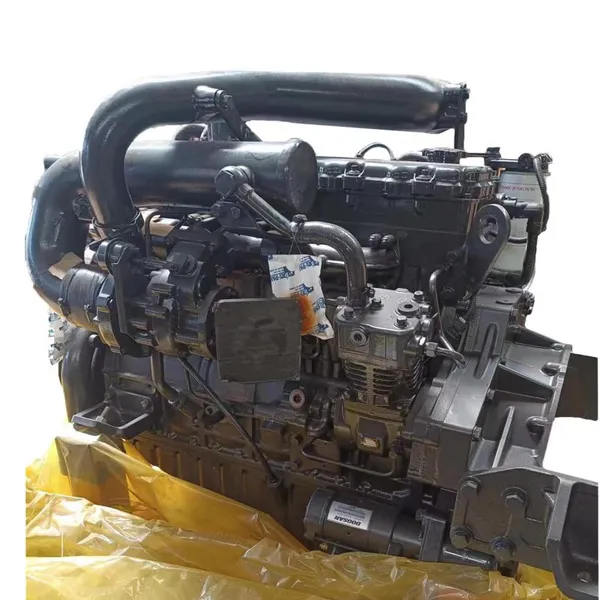
-
New BF6M2012C Cylinder 4-stroke Original Water-cooled Generator With Live Start FunctionUS$ 4500.00 - 5400.00MOQ: 1 Unit
-
Original Water Cooled 4 Stroke 6 Cylinder DEUTZ TCD2012062V Machinery EnginesUS$ 4888.00 - 5081.00MOQ: 1 Unit
-
Factory Outlet 6 Cylinder 250HP 2200rpm 6C8.3-C250 Construction Machinery Engines for CuminsUS$ 34627.00 - 36450.00MOQ: 1 Unit
-
1104D-44TA Diesel Engine 83kw New Water-Cooled Machine With Electric Start and Pump Good Price Per UnitUS$ 3700.00 - 4200.00MOQ: 1 Unit
-
Original Water Cooled 4 Stroke DEUTZ TCD 2013 L06 2V Machinery Engines for SaleUS$ 7070.00 - 7443.00MOQ: 1 Unit
-
Excavator Engine Assy QSL8.9 Complete Engine Assembly CUMMINS Qsl 9 Diesel EngineUS$ 4300.00 - 4600.00MOQ: 1 Unit
-
Genuine Vovo D4d EAE2 Diesel Engine for VOLVO EC140 ExcavatorNegotiableMOQ: 1 Unit
-
Factory Outlet 6 Cylinder 250HP 2200rpm 6C8.3-C250 Construction Machinery Engines for CuminsUS$ 4700.00 - 5100.00MOQ: 1 Unit
-
Good Price 153kw 4 Stroke Electric Start D7E Diesel Engine for Construction MachineryUS$ 8350.00MOQ: 1 Unit
-
WEICHAI 178kw 4 Stroke WD10G240E203 Diesel Engine for SEM660D SEM660B Wheel LoaderUS$ 3920.00 - 4127.00MOQ: 1 Unit
-
Dongfeng Shanghai SC11CB220G2B1 6-Cylinder Diesel Engine 162kw (220hp) SDEC 3306 New Condition Core Included Farm MachineryUS$ 6500.00MOQ: 1 Unit
-
ISUZU 4 Cylinder Diesel Engine 4BG1 Machinery Engines for Kobelco SK135 ExcavatorUS$ 6800.00MOQ: 1 Unit
-
130Hp Diesel Engine YC4D130 Yuchai Diesel Motor Price for TruckUS$ 3400.00 - 3600.00MOQ: 1 Unit
-
Shanghai SDEC SC9D220G2 162KW Diesel Engine for SEM922 SEM921 GraderUS$ 5320.00 - 5600.00MOQ: 1 Unit
-
Factory Outlet Sinotruk D1242 Engine Assembly for Construction IndustryUS$ 4615.00 - 4858.00MOQ: 1 Unit