
 Business License

How do I adjust the valves on a Deutz diesel engine?
As a seasoned supplier of Deutz diesel engines, I've had my fair share of experiences with these robust powerhouses. One of the crucial maintenance tasks that often comes up is valve adjustment. Proper valve adjustment is essential for the optimal performance, fuel efficiency, and longevity of a Deutz diesel engine. In this blog, I'll walk you through the step-by-step process of adjusting the valves on a Deutz diesel engine.
Understanding the Importance of Valve Adjustment
Before we dive into the adjustment process, let's briefly understand why valve adjustment is so important. The valves in a diesel engine play a critical role in controlling the intake of air and fuel and the exhaust of combustion gases. Over time, due to normal wear and tear, the valve clearances can change. If the clearances are too large, the valves may not open fully, leading to reduced power, poor fuel economy, and increased emissions. On the other hand, if the clearances are too small, the valves may not close properly, causing compression loss, overheating, and potential damage to the engine.
Tools and Materials You'll Need
Feeler gauges: A set of feeler gauges is essential for measuring the valve clearances accurately. Make sure you have a variety of sizes to cover the different valve clearances specified for your Deutz engine.
Wrench set: You'll need a set of wrenches to loosen and tighten the locknuts and adjusting screws on the valves.
Socket set: A socket set may be required to remove the valve cover and other components.
Torque wrench: A torque wrench is necessary to ensure that the locknuts are tightened to the correct torque specification.
Cleaning supplies: You'll need a clean rag and some degreaser to clean the valve cover and other components before and after the adjustment.
Preparing the Engine
Before you start adjusting the valves, it's important to prepare the engine properly. Here are the steps to follow:
Park the engine on a level surface and turn off the ignition. Make sure the engine is cool to the touch before you begin working on it.
Remove the valve cover. Use a socket set to remove the bolts holding the valve cover in place. Carefully lift the valve cover off the engine and set it aside.
Clean the valve cover and other components. Use a clean rag and some degreaser to clean the valve cover and the area around the valves. This will help prevent dirt and debris from falling into the engine during the adjustment process.
Identify the valves. Each valve on the Deutz engine is labeled with a number or letter. Refer to the engine's service manual to identify the intake and exhaust valves and their corresponding clearances.
Adjusting the Valves
Once you've prepared the engine, it's time to start adjusting the valves. Here's a step-by-step guide:
Rotate the engine to the top dead center (TDC) of the compression stroke for the first cylinder. You can do this by turning the crankshaft pulley in the direction of engine rotation until the timing mark on the pulley aligns with the mark on the engine block.
Check the valve clearances. Use a feeler gauge to measure the clearance between the valve stem and the rocker arm for each valve. Compare the measured clearance to the specification in the engine's service manual. If the clearance is too large or too small, it needs to be adjusted.
Adjust the valve clearances. To adjust the valve clearance, loosen the locknut on the adjusting screw using a wrench. Then, turn the adjusting screw clockwise to decrease the clearance or counterclockwise to increase the clearance. Use the feeler gauge to check the clearance as you make the adjustment. Once the clearance is within the specification, tighten the locknut while holding the adjusting screw in place.
Repeat the process for the remaining cylinders. Rotate the engine to the TDC of the compression stroke for each cylinder and repeat steps 2 and 3 to adjust the valve clearances for all the valves.
Check the valve clearances again. After adjusting all the valves, rotate the engine through a full revolution to ensure that the valves are seated properly. Then, check the valve clearances one more time to make sure they are still within the specification.
Reassembling the Engine
Once you've adjusted the valves and checked the clearances, it's time to reassemble the engine. Here are the steps to follow:
Clean the valve cover and the mating surface on the engine block. Use a clean rag and some degreaser to remove any dirt and debris from the valve cover and the mating surface.
Install a new gasket on the valve cover. Make sure the gasket is properly aligned and seated on the valve cover.
Place the valve cover back on the engine and tighten the bolts. Use a socket set to tighten the bolts holding the valve cover in place. Make sure the bolts are tightened evenly to prevent leaks.
Reconnect any hoses or electrical connections that were removed. Double-check that all the connections are secure and properly routed.
Start the engine and check for any leaks or abnormal noises. Let the engine run for a few minutes and listen for any unusual noises or vibrations. Check for any leaks around the valve cover or other components.
Conclusion
Adjusting the valves on a Deutz diesel engine is a relatively straightforward process, but it requires attention to detail and the use of the proper tools. By following the steps outlined in this blog, you can ensure that your Deutz engine is running at its best. Remember to refer to the engine's service manual for the specific valve clearances and torque specifications for your engine.
If you're in the market for a Deutz diesel engine or need any parts or service, we're here to help. We offer a wide range of Deutz engines, including the Deutz TCD2012L062V Excavator Motor, BF6M1013FC Deutz Diesel Engine, and BF12L513C Deutz Machinery Engine. Contact us today to learn more about our products and services and to discuss your specific needs.
Recently Posted
-
Do Deutz diesel engines require special fuel?
August 21, 2026The delivery time for Deutz engine parts is a critical factor that both suppliers and customers need to consider carefully. As a r Read More
 -
Having disassembled 30 6BTAA5.9-C205 loader engines, I've finally figured out how the piston "walks.
August 20, 2026Recently, I helped a repair shop clean up a mess—they were replacing the four-piece set on a loader equipped with a 6BTAA5.9-C205 Read More
 -
How does the 6BTA5.9-C180 engine handle sudden load changes?
August 13, 2026Recently, a Cummins 6BTA5.9-C180 rotary drilling rig suddenly got its drill rod stuck in a boulder, causing the load to jump to fu Read More
 -
How to replace the spark plugs of Xichai diesel engine (if applicable)?
August 11, 2026As a trusted supplier of Xichai diesel engines, I understand the importance of maintaining these powerful machines to ensure optim Read More

Contact Us
Recommended Products
-
 New 129 kW QSB6.7 Diesel Engine Excavator Construction Machinery Electric Start Water-Cooled Core Including Motor PumpUS$ 1888.00 - 3888.00MOQ: 1 Unit
 -
Wholesale Diesel Engine Genuine 4 Stroke Direct Injection Doosan DL08 Engine for SaleUS$ 4558.00 - 4800.00MOQ: 1 Unit
-
Factory Price DOOSAN DL06 Construction Machinery Motor 6 Cylinder 115kw Water-Cooled With Core Components Engine and PumpUS$ 4752.00 - 5000.00MOQ: 1 Unit
-
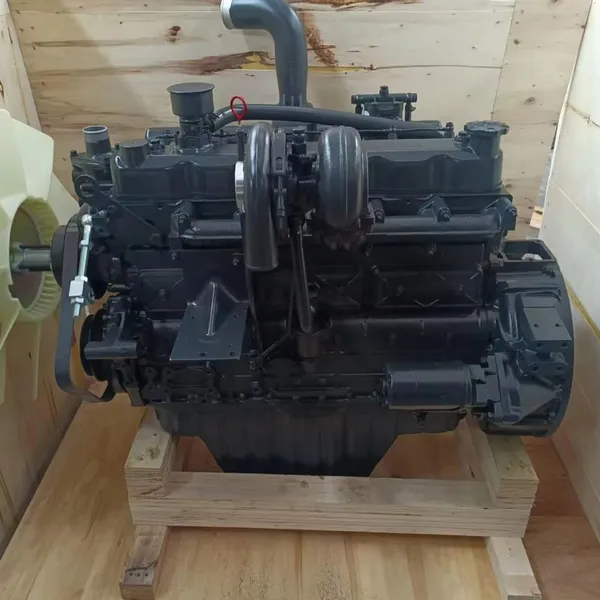
Factory Price 4 Stroke 115kw Doosan DB58 Complete Engine Assy for Dx220 ExcavatorUS$ 3450.00 - 3650.00MOQ: 1 Unit
-
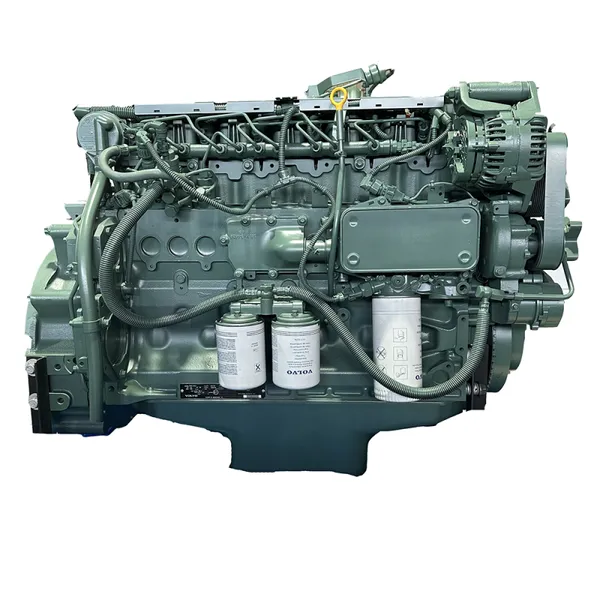
Factory Manufacture 123kw 4 Stroke Volvo D6e Machinery Engine for Construction MachineryUS$ 7500.00MOQ: 1 Unit
-
New BF6M2012C Cylinder 4-stroke Original Water-cooled Generator With Live Start FunctionUS$ 4500.00 - 5400.00MOQ: 1 Unit
-
Original Water Cooled 4 Stroke 6 Cylinder DEUTZ TCD2012062V Machinery EnginesUS$ 4888.00 - 5081.00MOQ: 1 Unit
-
Factory Outlet 6 Cylinder 250HP 2200rpm 6C8.3-C250 Construction Machinery Engines for CuminsUS$ 34627.00 - 36450.00MOQ: 1 Unit
-
1104D-44TA Diesel Engine 83kw New Water-Cooled Machine With Electric Start and Pump Good Price Per UnitUS$ 3700.00 - 4200.00MOQ: 1 Unit
-
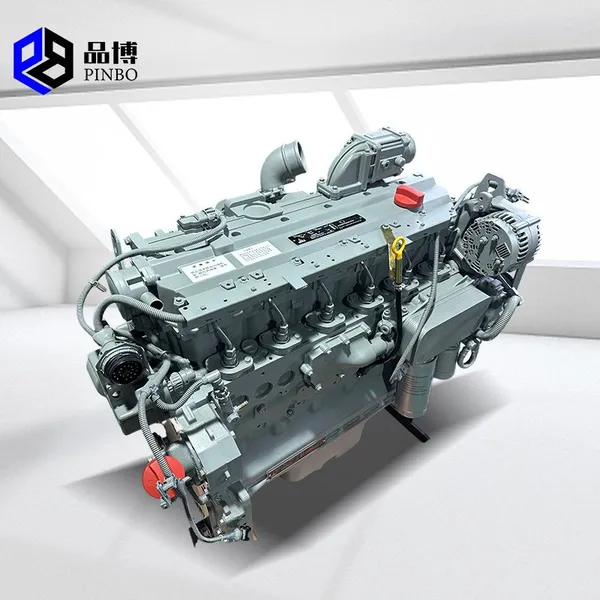
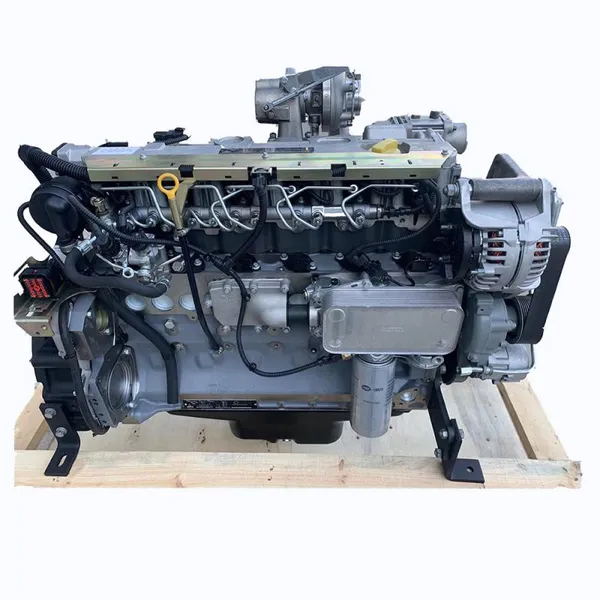
Original Water Cooled 4 Stroke DEUTZ TCD 2013 L06 2V Machinery Engines for SaleUS$ 7070.00 - 7443.00MOQ: 1 Unit
-
Excavator Engine Assy QSL8.9 Complete Engine Assembly CUMMINS Qsl 9 Diesel EngineUS$ 4300.00 - 4600.00MOQ: 1 Unit
-
Genuine Vovo D4d EAE2 Diesel Engine for VOLVO EC140 ExcavatorNegotiableMOQ: 1 Unit
-
Factory Outlet 6 Cylinder 250HP 2200rpm 6C8.3-C250 Construction Machinery Engines for CuminsUS$ 4700.00 - 5100.00MOQ: 1 Unit
-
Good Price 153kw 4 Stroke Electric Start D7E Diesel Engine for Construction MachineryUS$ 8350.00MOQ: 1 Unit
-
WEICHAI 178kw 4 Stroke WD10G240E203 Diesel Engine for SEM660D SEM660B Wheel LoaderUS$ 3920.00 - 4127.00MOQ: 1 Unit
-
Dongfeng Shanghai SC11CB220G2B1 6-Cylinder Diesel Engine 162kw (220hp) SDEC 3306 New Condition Core Included Farm MachineryUS$ 6500.00MOQ: 1 Unit
-
ISUZU 4 Cylinder Diesel Engine 4BG1 Machinery Engines for Kobelco SK135 ExcavatorUS$ 6800.00MOQ: 1 Unit
-
130Hp Diesel Engine YC4D130 Yuchai Diesel Motor Price for TruckUS$ 3400.00 - 3600.00MOQ: 1 Unit
-
Shanghai SDEC SC9D220G2 162KW Diesel Engine for SEM922 SEM921 GraderUS$ 5320.00 - 5600.00MOQ: 1 Unit
-
Factory Outlet Sinotruk D1242 Engine Assembly for Construction IndustryUS$ 4615.00 - 4858.00MOQ: 1 Unit